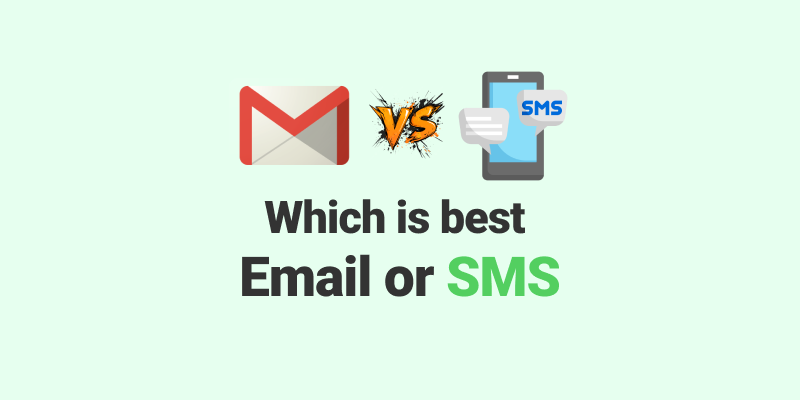
In the modern communication landscape, businesses and organizations face a key question: Which channel should you use to reach your audience — SMS text messages or email? Each has its strengths, challenges, and ideal use cases. The right choice depends on your goals, audience, and how you plan to engage them.
Whether you’re a small business owner, a school or college administrator, or part of a nonprofit, understanding the difference between using a bulk SMS sender and email campaigns is essential. In this guide, we’ll compare both channels in depth — performance metrics, advantages, limitations — and help you decide which fits your needs (or when to use both for maximum impact).
Why It Matters
Today, your audience is bombarded by marketing messages. Mailing lists, social feed ads, inbox promotions — they’re all pushing for attention. In that noise, choice of channel can make or break how your content is received.
SMS and email each play a crucial part in modern communication. But using the wrong one at the wrong time can mean wasted effort, frustrated audiences, and lower engagement.
By comparing them side-by-side, you’ll gain clarity on when to use a bulk SMS sender like Send Blaster Pro, and when to lean on email — or better yet, how to combine both for maximum reach and conversion.
Performance: SMS vs Email
Here’s a breakdown of how SMS and email compare based on engagement, speed, cost, and usage.
Open Rates & Read Time
- SMS: Studies report open rates around 95% – 98%, with many messages read within minutes of delivery. Sixth City Marketing+1
- Email: Open rates are far lower, generally around 20%–30%, depending on industry and list quality. mobiledominate.com+1
This difference matters — if your message isn’t seen, it cannot convert. SMS wins for immediate visibility.
Click-Through & Conversion Rates
- SMS: Click-through and response rates for SMS can reach 10%–20% or higher in well-executed campaigns. trustpiple.com+1
- Email: CTRs are often in the single digits (2%–4%), with conversions lower still. trilokana.com+1
If your goal is quick action (appointment confirmation, flash sale, urgent alert), SMS is far stronger.
Cost & List Growth
- Email: Easier and cheaper to build lists (you can capture email addresses via forms, pop-ups, etc.). stimulate.agency
- SMS: Phone numbers are harder to collect (people guard them more), and sending messages is usually more costly per message. mobiledominate.com
For large-scale reach and low cost, email remains strong.

Best Timing & Use Case
- SMS: Ideal for time-sensitive, high urgency messages — reminders, confirmations, flash promotions.
- Email: Ideal for longer content, detailed offers, newsletters, nurturing relationships over time.
Experts note that SMS is best for immediate action, while email supports deeper engagement. Kixie+1
Pros and Cons: Bulk Sender (SMS) vs Email Campaigns
Here’s a clearer look at benefits and limitations of each channel.
Bulk SMS Sender (Using Your Own Number or Platform)
Pros:
- Very high visibility and open rates.
- Fast response times.
- Messages feel personal (coming from your number or trusted identity).
- Excellent for alerts, conversions, reminders, urgent updates.
Cons:
- List growth can be slower (need opt-in and phone numbers).
- Higher cost per message compared to email.
- Limited length (typically ~160 characters) and fewer formatting options.
- Stronger regulatory pressure and compliance (opt-in, opt-out).
Email Marketing
Pros:
- Larger reach and scale (email lists tend to be bigger).
- Can carry rich content: images, long text, links, attachments.
- Lower cost per message.
- Allows deeper storytelling, nurturing, and brand building.
Cons:
- Lower open and response rates.
- Messages can get caught in spam filters or ignored.
- Slower delivery and less immediacy.
- Needs more content creation effort.
Which Channel Should You Use?
Rather than asking “SMS vs Email,” a better question is: “Which channel is right for my goal, and when should I use each?”
Ask These Questions:
- Is my message urgent or time-sensitive?
- Do I need a quick response or action from recipients?
- Is my list opt-in and well-segmented?
- Will my message benefit from rich media or longer content?
- What is my budget and cost per recipient?
Choose SMS when you:
- Need a fast response (RSVP, reminder, flash sale).
- Have a smaller, highly engaged list of phone numbers.
- Want your message seen immediately and acted on quickly.
- Want to send from a recognizable sender number for trust and credibility.
Choose Email when you:
- Want to share detailed content (newsletter, product tutorial, brand story).
- Are building long-term customer relationships.
- Have rich media and longer copy to share.
- Need to reach a broader audience with lower cost.
Use Both Channels Together
The smartest strategy often isn’t choosing one over the other — it’s combining them. Example workflow:
- Send an email with full details of your offer.
- Follow up with an SMS reminder as the deadline approaches.
This kind of synergy leverages email’s depth and SMS’s immediacy. trilokana.com

Best Practices for Each Channel
Here are actionable tips for both SMS and email to make the most of each.
SMS Best Practices (Using a Bulk Sender Tool)
- Consent first: Make sure recipients opted in and know what kind of messages they’ll receive.
- Brand recognition: Always include your organization or business name.
- Clear, concise copy: Keep under 160 characters when possible.
- Strong call to action: Tell exactly what you want them to do (e.g., “Reply YES to confirm”, or “Tap link to claim offer”).
- Timing: Send during business hours or reasonable times for your audience.
- Limit frequency: Too many messages in a short period can lead to opt-outs or complaints.
- Track performance: Monitor sends, replies, and opt-outs to refine your list and message style.
Email Best Practices
- Use clear subject lines and pre-headers for better open rates.
- Segment your list for relevant content (e.g., new customers vs repeat customers).
- Personalize content (name, past purchase info, location) to boost engagement.
- Use design and formatting — images, buttons, links — to make it interesting.
- Automate workflows: welcome series, follow-ups, nurture sequences.
- Clean your list: remove inactive subscribers to keep deliverability high.
- Test subject lines, send times, content to improve results over time.
Case Studies: When SMS or Email Wins
Scenario 1: Retail Flash Sale
A local store has a one-day 20% off sale starting this afternoon.
- SMS blast: “StoreName: Flash Sale starts now! 20% off all items today only. Click link to shop. Reply STOP to unsubscribe.”
Why SMS works: urgency, short window, high visibility. - Email: Longer email with images, full details, possibly arrives too late or ignored in crowded inbox.
Winner: SMS for speed and action.
Scenario 2: Monthly Newsletter + Brand Story
An educational nonprofit sends a monthly update on its impact, upcoming events, volunteer profiles and donation opportunities.
- Email: Best format for detailed info, photos, links.
- SMS: Could be a short follow-up reminder to open the email or RSVP for an event.
Winner: Email for depth, SMS as follow-up.
Scenario 3: Appointment Reminder for Clinic
A clinic needs to remind patients of tomorrow’s appointments.
- SMS: Quick reminder, patients read it in minutes, low no-show risk.
- Email: Might be overlooked or deferred to later.
Winner: SMS for immediacy and reliability.
Integrating SMS and Email for Maximum Impact
Rather than thinking “SMS or email,” consider these integration strategies:
- Use email to introduce new product updates, brand stories, newsletters.
- Use SMS to follow up: “Don’t forget our offer ends tonight – click link now.”
- Automate: when someone signs up via SMS form, send a welcome email, then a reminder SMS.
- Use performance data from one channel to segment the other (e.g., if someone clicks a link in email but didn’t buy, send an SMS).
- Measure combined ROI: look at which channel drove final conversion, then refine accordingly.
The combined approach often leads to better engagement, higher conversions, and stronger brand recall. Blueshift

Cost-Effectiveness and Growth Considerations
While SMS may cost more per message, it often delivers higher value per contact. Emails scale more easily but may require more volume to see impact. Here’s what to keep in mind:
- Balance budget vs reach: If you have 500 loyal contacts, SMS may be ideal. If you have 5,000 subscribers and want to nurture leads, email may be more cost-effective.
- Monitor your cost per conversion: Don’t just look at message cost; look at how many contacts converted into action or revenue.
- Build your list: Invest in both phone number opt-ins and email subscriptions.
- Segment by value: Use SMS for your high-value, engaged contacts. Use email for broader audience growth.
- Keep compliance in mind: SMS involves stricter regulatory burden (opt-ins, carrier compliance). Email also has rules, but fewer immediate blockers.
Summary: Which Channel is Best?
- Use SMS when you need immediate action, high visibility, and you have a targeted, engaged list of phone numbers.
- Use Email when you want to build relationships, send rich content, nurture leads over time, or scale to a larger audience with lower cost per message.
- Use both when you want to cover all bases — depth via email and urgency via SMS — layering them into a smart messaging strategy.
How Send Blaster Pro Makes It Easy for Both Channels
With Send Blaster Pro, you don’t have to choose between channels — you can leverage them. Here’s how:
- Use your own phone or web apps (Google Messages, WhatsApp Web, iMessage) to send highly personal SMS messages.
- Upload Excel sheets or contact lists to automate bulk SMS blasts — perfect for time-sensitive messages.
- At the same time, capture email addresses from your audience and run email campaigns through your preferred platform — and use SMS as a follow-up nudge.
- Use the same message list and segmentation logic across both channels for consistent outreach.
- Track results in one place, review deliveries, responses and conversions — then refine your strategy.